Toxic Chemical Right to Know Laws

``If the federal government is not going to protect us, why don't we do it ourselves?``
When Ronald Reagan became president in 1980, one of his first acts was to rescind the toxic chemical right-to-know workplace standard that the Carter administration had proposed. It seemed like a quiet bureaucratic decision, but it arrived at the worst possible moment for Ohio. That same year, the Cincinnati Post began publishing a disturbing series of articles revealing that Cincinnati had become the per capita cancer capital of the United States. The city’s residents were literally dying, and no one could explain why.

Alarmed by these revelations, Cincinnati City Council decided to hold hearings to investigate the connection between chemical exposure and disease. The investigation took a crucial turn when Dr. Eula Bingham, who had led the Occupational Safety and Health Administration under President Carter, returned to her native Cincinnati to testify. She asked a simple but transformative question: “If the federal government is not going to protect us, why don’t we do it ourselves?”

That question became the rallying cry for Ohio Citizen Action and its allies. What followed was, as Sandy Buchanan (Ohio Citizen Action executive director 1993-2013) would later describe it, “a royal battle.” The chemical industry, led by Cincinnati-based Procter & Gamble, mobilized to fight the proposed ordinance that would require companies to disclose what toxic chemicals workers and community residents were being exposed to. But Procter & Gamble and its allies made a crucial tactical error – they opposed the ordinance outright rather than attempting to negotiate and water it down. In doing so, they locked themselves out of the negotiations entirely.

After two years of intense campaigning involving Ohio Citizen Action, labor unions, communities, firefighters, and technical experts from NIOSH, Cincinnati passed what became the nation’s strongest toxic chemical right-to-know ordinance. The victory was not just local – it was a blueprint. Ohio Citizen Action canvassers took the message door-to-door in cities across Ohio. Akron passed a toxic right-to-know ordinance, led by the organizer Rich Swirsky. Norwood followed. Then Oregon. Each time, as the chemical industry tried new tactics to water down proposals, Ohio Citizen Action mobilized community pressure on city council members who might have wavered.

By 1984, Ohio had become a national leader in chemical transparency. But that year brought a tragedy that would transform the movement from a local and state concern into a federal imperative. On a December night in Bhopal, India, methyl isocyanate gas escaped from a Union Carbide facility, killing and injuring tens of thousands of people in what became one of the worst industrial disasters in history. The disaster sparked an urgent question in the halls of Congress: Could this happen here? And the terrifying answer was that no one could say for certain because the United States had no national right-to-know laws that would even allow the public to know what chemicals were present in their communities.

Ohio Citizen Action understood that Bhopal had created a unique political opening. The organization joined a national campaign to pass federal legislation that would be directly based on Ohio’s proven model, particularly the provisions that gave firefighters and local officials immediate access to chemical information. The campaign was audacious in scale. Organizers collected over one million signatures in support of federal legislation. Four truck caravans were organized, each starting from different corners of the country, loaded with petitions and samples of toxic waste. These trucks made stops all along their routes, picking up more signatures and testimonies from communities affected by chemical pollution. Finally, they converged on Washington DC, where organizers delivered the massive collection of petitions directly to members of Congress.

The victory was not inevitable. The auto industry, threatened by the implications of mandatory chemical reporting, attempted to gut the bill by excluding the reporting of chemicals that could cause cancer and other illnesses after long-term exposure. It was a technical amendment that would have gutted the heart of the legislation. But after an intense fight, the federal right-to-know law passed—by a single vote. One vote stood between the American people’s right to know what chemicals they were being exposed to and industrial secrecy.

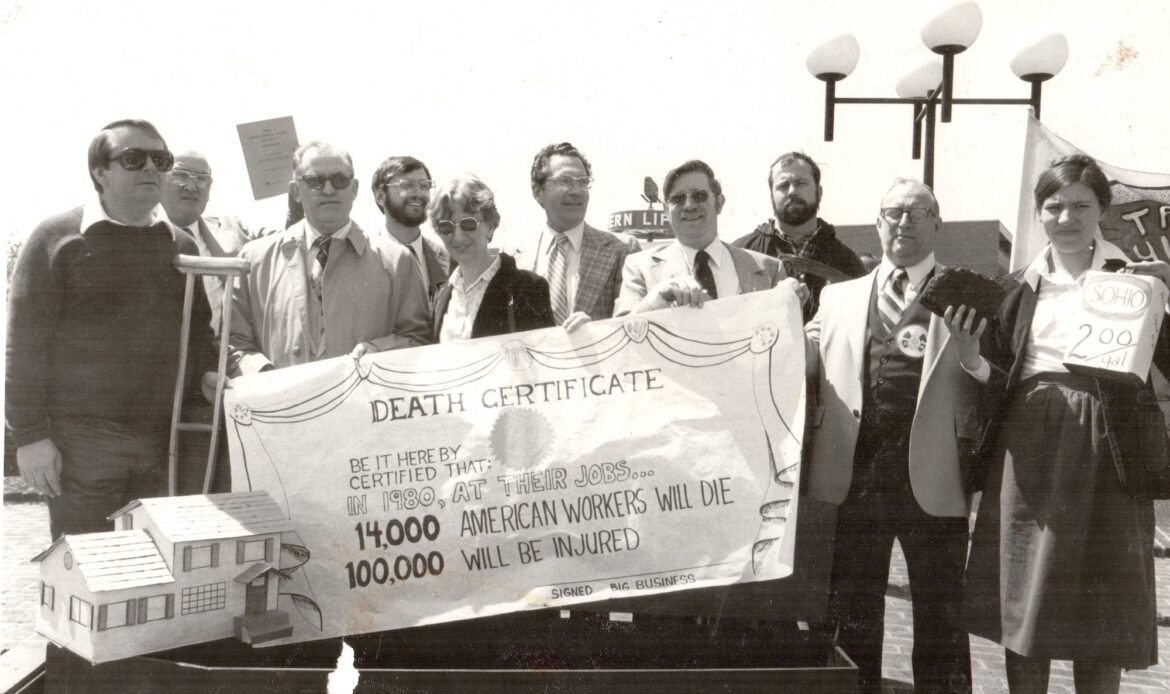
Jay Westbrook organizes for a strong “Right-to-Know” ordinance to require the labeling of toxic chemicals in the workplace (1984)
Toxic Chemical Right to Know Laws

``If the federal government is not going to protect us, why don't we do it ourselves?``
When Ronald Reagan became president in 1980, one of his first acts was to rescind the toxic chemical right-to-know workplace standard that the Carter administration had proposed. It seemed like a quiet bureaucratic decision, but it arrived at the worst possible moment for Ohio. That same year, the Cincinnati Post began publishing a disturbing series of articles revealing that Cincinnati had become the per capita cancer capital of the United States. The city’s residents were literally dying, and no one could explain why.

Alarmed by these revelations, Cincinnati City Council decided to hold hearings to investigate the connection between chemical exposure and disease. The investigation took a crucial turn when Dr. Eula Bingham, who had led the Occupational Safety and Health Administration under President Carter, returned to her native Cincinnati to testify. She asked a simple but transformative question: “If the federal government is not going to protect us, why don’t we do it ourselves?”

That question became the rallying cry for Ohio Citizen Action and its allies. What followed was, as Sandy Buchanan (Ohio Citizen Action executive director 1993-2013) would later describe it, “a royal battle.” The chemical industry, led by Cincinnati-based Procter & Gamble, mobilized to fight the proposed ordinance that would require companies to disclose what toxic chemicals workers and community residents were being exposed to. But Procter & Gamble and its allies made a crucial tactical error – they opposed the ordinance outright rather than attempting to negotiate and water it down. In doing so, they locked themselves out of the negotiations entirely.

After two years of intense campaigning involving Ohio Citizen Action, labor unions, communities, firefighters, and technical experts from NIOSH, Cincinnati passed what became the nation’s strongest toxic chemical right-to-know ordinance. The victory was not just local – it was a blueprint. Ohio Citizen Action canvassers took the message door-to-door in cities across Ohio. Akron passed a toxic right-to-know ordinance, led by the organizer Rich Swirsky. Norwood followed. Then Oregon. Each time, as the chemical industry tried new tactics to water down proposals, Ohio Citizen Action mobilized community pressure on city council members who might have wavered.

By 1984, Ohio had become a national leader in chemical transparency. But that year brought a tragedy that would transform the movement from a local and state concern into a federal imperative. On a December night in Bhopal, India, methyl isocyanate gas escaped from a Union Carbide facility, killing and injuring tens of thousands of people in what became one of the worst industrial disasters in history. The disaster sparked an urgent question in the halls of Congress: Could this happen here? And the terrifying answer was that no one could say for certain because the United States had no national right-to-know laws that would even allow the public to know what chemicals were present in their communities.

Ohio Citizen Action understood that Bhopal had created a unique political opening. The organization joined a national campaign to pass federal legislation that would be directly based on Ohio’s proven model, particularly the provisions that gave firefighters and local officials immediate access to chemical information. The campaign was audacious in scale. Organizers collected over one million signatures in support of federal legislation. Four truck caravans were organized, each starting from different corners of the country, loaded with petitions and samples of toxic waste. These trucks made stops all along their routes, picking up more signatures and testimonies from communities affected by chemical pollution. Finally, they converged on Washington DC, where organizers delivered the massive collection of petitions directly to members of Congress.

The victory was not inevitable. The auto industry, threatened by the implications of mandatory chemical reporting, attempted to gut the bill by excluding the reporting of chemicals that could cause cancer and other illnesses after long-term exposure. It was a technical amendment that would have gutted the heart of the legislation. But after an intense fight, the federal right-to-know law passed—by a single vote. One vote stood between the American people’s right to know what chemicals they were being exposed to and industrial secrecy.

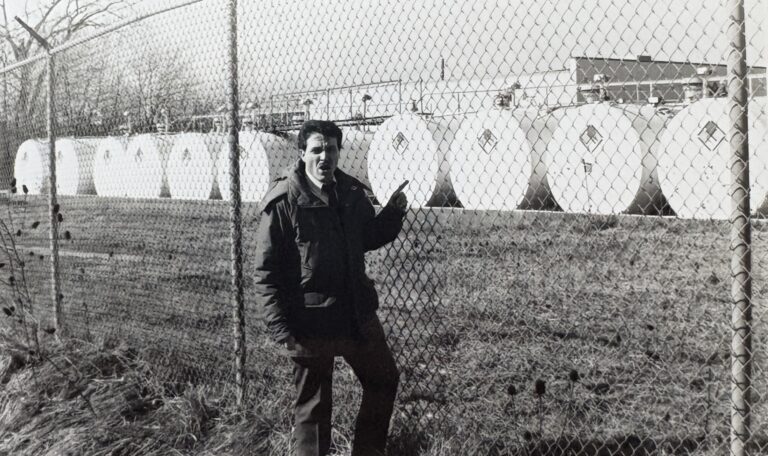
Jay Westbrook organizes for a strong “Right-to-Know” ordinance to require the labeling of toxic chemicals in the workplace (1984)